Jasmine Najari, a senior majoring in both Biology and Anthropology with Specialization in Global Health and Environment, in the School of Arts and Sciences at Washington University in St. Louis, is the winner of the 2026 Garland Allen Prize in Diversity, Equity, and Inclusion in the Biological Sciences.
Professor Emeritus Garland E. Allen III was a renowned science historian and an outstanding leader in the Washington University Biology Department, advocating for racial and gender equality in the biological sciences. The Allen Prize was established in 2023 to honor his work and his memory, and is awarded to a graduating senior biology major who has made significant efforts in DEI.
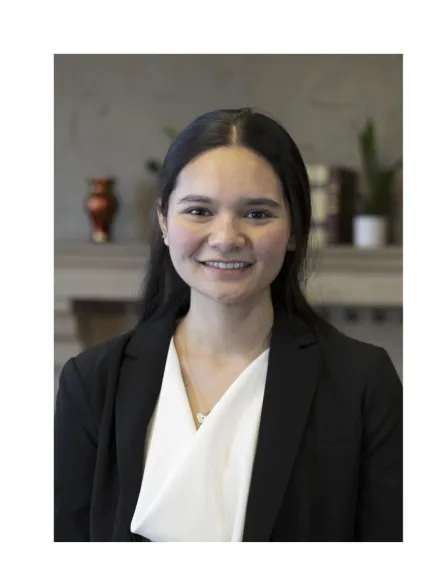
The winner is selected by members of the Biology Community Committee. Members were greatly impressed by Najari’s commitment to supporting St. Louis area refugees and immigrants, including by founding the WashU Refugee and Immigrant Health Advocates (RIHA) student group and through her Civic Scholars project on improving access to healthcare and bridging gaps in healthcare education among refugee and immigrant populations. The committee appreciated how her efforts in DEI extended to her senior thesis research on the connection between maternal discrimination during pregnancy and offspring mental health. Additionally, they commended her efforts as a teaching assistant for BIOL 1531: Biology in the News to improve student accessibility, to make the language of course materials more inclusive, and to help students lean into critical thinking and ethical issues around genetic engineering technologies.
Najari was nominated by Senior Lecturer in Biology Heather Barton, “Jasmine is an exceptional individual, passionate about improving diversity, equity, and inclusion at WashU through community work, research, and as a teaching assistant in introductory and general biology courses. She thinks deeply about equity and accessibility for students, and is comfortable providing constructive criticism and feedback to instructors with regard to class design.”
Najari says, “I am deeply grateful to receive this award, especially given how closely its values resonate both with my personal background and commitment to working with refugee and immigrant health communities. I hope to continue advocating for unity, compassion, and inclusivity not only within academic and professional spaces in the biological sciences, but also within our own communities. This award reaffirms the value of this work and of continuing to champion community and empathy.”
She will receive the award during a biology awards ceremony in May.