Undergraduate Andy Huang talks about his experience conducting research on opioid receptors in the Castro Lab
For the last three years, I have been a member of the Castro Lab, where we disentangle the role of opioid receptors within both the CNS and peripheral systems. My team focuses on the role of the mu and delta opioid receptors in glucose-mediated islet dynamics, the driver of insulin and glucagon secretion within the pancreas. This research is important for both further understanding the damaging role of chronic opioid use as well as new therapeutics for blood glucose dysregulation in type 1 and type 2 diabetes.
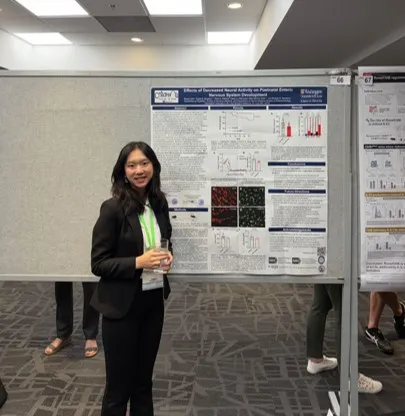
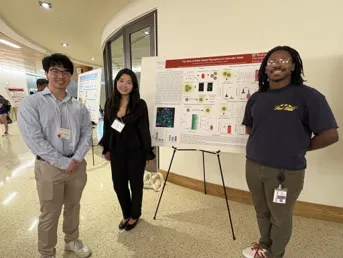
My primary role within the lab has been modeling the role of these opioid receptors in calcium dynamics within alpha and beta cells. To do this, I have completed countless confocal imaging experiments to elucidate the phenotypes associated with knocking out mu and delta opioid receptors, as well as treating them with agonists and antagonists. My work has led to some exciting projects, many of which I have presented at WashU’s undergraduate research symposiums and some I hope to share at WashU Medicine’s annual diabetes day.
The time I have spent in the Castro Lab has first and foremost helped me further my passions in biological research. From planning out experiments to spending hours in the confocal imaging center and hearing the projects of other researchers, I have learned how supportive the WashU research community is. Furthermore, I have learned the organizational skills that come with completing long research projects. Beyond bench research, the process of thinking through scientific problems and collaborating with team members to make discoveries are the same skills I hope to take into my future role as a physician.